

Best Peptides for Anti-Aging in 2026: Evidence-Based Rankings
Finding the best peptides for anti-aging means cutting through a mountain of hype. Everyone has a favorite. Vendors push whatever they're selling. Forums are full of anecdotes masquerading as evidence.
This ranking is different. We evaluated every major anti-aging peptide on three criteria: strength of scientific evidence, safety profile, and real-world accessibility. No affiliate links. No sponsored picks. Just the data.
How We Ranked the Best Anti-Aging Peptides
Every peptide on this list was scored across three dimensions:
Evidence Strength (1-5): How many published studies exist? Are there human clinical trials, or only animal data? Has it been replicated by independent research groups?
Safety Profile (1-5): What are the known side effects? How well-characterized is the risk? Is there long-term safety data? For a deeper dive into peptide safety, see our complete peptide safety guide.
Accessibility (1-5): Can you actually get it? Is it available through compounding pharmacies, or only gray-market research suppliers? How practical is the administration protocol?
1. GHK-Cu — The Gold Standard
Evidence: 5/5 | Safety: 5/5 | Accessibility: 4/5
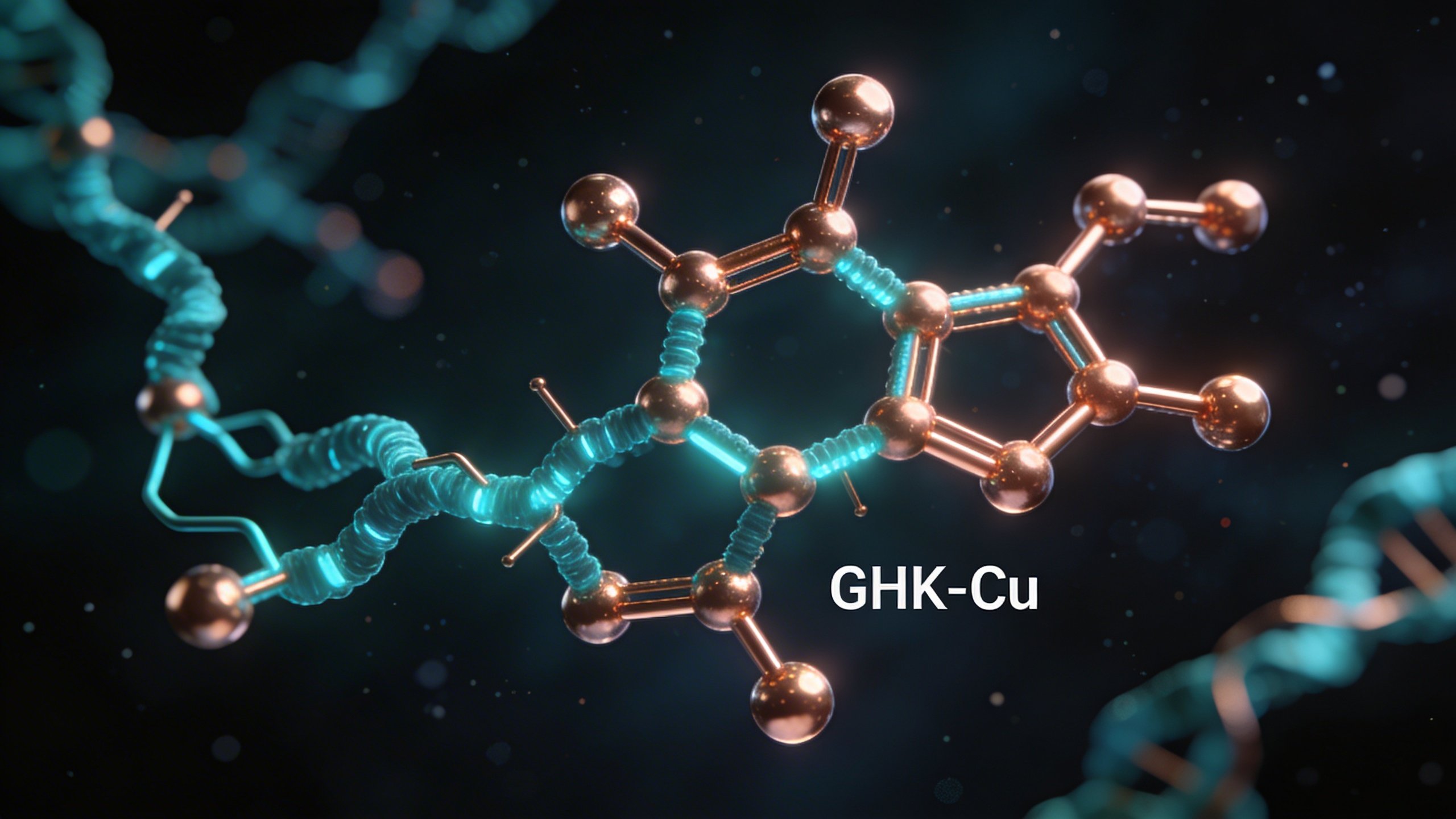
GHK-Cu (copper peptide) sits at the top of this list for a reason. It's one of the most well-researched peptides in existence, with over 100 published studies demonstrating effects on skin remodeling, wound healing, collagen synthesis, and anti-inflammatory signaling.
Originally discovered by Dr. Loren Pickart in the 1970s, GHK-Cu is a naturally occurring tripeptide found in human plasma. Its concentration declines significantly with age — from around 200 ng/mL at age 20 to roughly 80 ng/mL by age 60. That decline correlates directly with visible aging.
A landmark 2014 study in the journal BioMed Research International showed that GHK-Cu activates over 4,000 genes involved in tissue repair and anti-inflammatory response. It stimulates collagen I and III production, increases elastin, enhances angiogenesis, and promotes stem cell activity.
The safety profile is essentially immaculate. As a naturally occurring human peptide, immunogenicity risk is minimal. No significant adverse effects have been reported at standard doses in any published study. We wrote an entire deep-dive on GHK-Cu benefits and dosing if you want the full picture.
Available as both a topical serum and injectable, GHK-Cu is one of the most versatile and well-supported anti-aging peptides available today.
2. BPC-157 — The Body's Repair Peptide
Evidence: 4/5 | Safety: 5/5 | Accessibility: 4/5
BPC-157 (Body Protection Compound-157) is derived from a protein found in human gastric juice. It's become one of the most popular peptides in the biohacking community — and for good reason.
The research on BPC-157 is extensive in animal models. A 2018 review in Current Pharmaceutical Design cataloged its effects across multiple systems: accelerated tendon and ligament healing, gut lining repair, neuroprotective effects, and anti-inflammatory action.
For anti-aging specifically, BPC-157's value lies in its systemic healing properties. Age-related decline isn't just about wrinkles — it's about accumulated tissue damage, chronic inflammation, and impaired recovery. BPC-157 appears to address all three at the mechanistic level.
The main limitation keeping it from the top spot: while animal data is exceptional, formal human clinical trials are still limited. Anecdotal evidence from thousands of users is overwhelmingly positive, but we rank based on published science, not forum reports.
Safety-wise, no toxicity has been reported at any dose tested in animal studies. It's available both orally and via injection.
3. Epithalon (Epitalon) — The Telomere Peptide
Evidence: 3/5 | Safety: 4/5 | Accessibility: 3/5
Epithalon is a synthetic version of epithalamin, a peptide naturally produced by the pineal gland. Its primary claim to fame: it activates telomerase, the enzyme responsible for maintaining telomere length.
Telomere shortening is one of the most well-established hallmarks of biological aging. Research by Professor Vladimir Khavinson, published in the Bulletin of Experimental Biology and Medicine, demonstrated that Epithalon increased telomerase activity in human somatic cells and extended the lifespan of treated cell cultures.
In animal studies, Epithalon extended the lifespan of treated mice by approximately 10-15%. It also showed improvements in melatonin production, immune function, and antioxidant status.
The evidence base is solid but narrower than GHK-Cu or BPC-157. Most studies come from Russian research groups, and independent replication in Western labs has been limited. That doesn't invalidate the findings, but it's worth noting from an evidence quality perspective.
Epithalon is typically administered as a subcutaneous injection in 10-day cycles. The safety profile in available studies is clean — no significant adverse effects reported.
4. Collagen Peptides — The Accessible Option
Evidence: 5/5 | Safety: 5/5 | Accessibility: 5/5
Yes, collagen peptides belong on this list. They're not exotic. They're not injectable. But the evidence supporting their anti-aging effects is stronger than almost any other peptide.
A 2019 systematic review in the Journal of Drugs in Dermatology analyzed 11 randomized controlled trials with over 800 participants. The findings: oral collagen peptide supplementation significantly improved skin hydration, elasticity, and wrinkle depth compared to placebo.
The mechanism is straightforward. When you ingest collagen peptides, they're broken down into dipeptides and tripeptides that are absorbed into the bloodstream and accumulate in the skin. There, they stimulate fibroblasts to produce new collagen and elastin.
If you're new to peptides and want to start with zero risk, collagen peptides are your entry point. They're FDA-recognized as GRAS, available at every supplement store, and backed by robust human trial data.
5. TB-500 (Thymosin Beta-4) — The Recovery Accelerator
Evidence: 3/5 | Safety: 4/5 | Accessibility: 3/5
TB-500 is a synthetic fragment of Thymosin Beta-4, a naturally occurring peptide involved in tissue repair, cell migration, and blood vessel formation. It's primarily known for its wound-healing and recovery-enhancing properties.
For anti-aging, TB-500's relevance is in its ability to promote systemic tissue regeneration. Published research shows it accelerates wound healing, reduces inflammation, and promotes hair regrowth in animal models. A study in the Annals of the New York Academy of Sciences documented its cardioprotective effects and ability to repair damaged heart tissue.
TB-500 pairs exceptionally well with BPC-157 — many experienced users run them together for synergistic healing and recovery effects. The anti-aging application is primarily about maintaining tissue integrity and accelerating repair processes that slow down with age.
Accessibility is more limited than top-ranked options, as it's primarily available through research peptide suppliers. For sourcing guidance, check our guide on how to source peptides safely.
6. GLP-1 Agonists (Semaglutide/Tirzepatide) — The Metabolic Reset
Evidence: 5/5 | Safety: 3/5 | Accessibility: 3/5
GLP-1 agonists like semaglutide (Ozempic/Wegovy) and tirzepatide (Mounjaro) have exploded into mainstream awareness for weight loss, but their anti-aging potential extends far beyond the scale.
Research published in major journals has shown GLP-1 agonists reduce systemic inflammation, improve cardiovascular markers, show neuroprotective effects, and may reduce the risk of age-related diseases including certain cancers and Alzheimer's disease.
The evidence base is massive — these are FDA-approved drugs with thousands of participants in clinical trials. But the safety rating is lower because of significant side effects: nausea, gastroparesis, potential thyroid concerns, muscle loss, and the still-unknown long-term effects of chronic use.
These should only be used under medical supervision. They're included here because the anti-aging potential is genuine, but the risk-benefit calculation is more complex than simpler peptides like GHK-Cu.
Honorable Mentions
DSIP (Delta Sleep-Inducing Peptide): Improves sleep quality, which is foundational to anti-aging. Limited but intriguing evidence. Sleep optimization is one of the most underrated anti-aging interventions.
Selank: Anxiolytic and nootropic peptide with immunomodulatory properties. Approved in Russia as a pharmaceutical. Interesting for the stress-aging connection.
SS-31 (Elamipretide): Targets mitochondrial dysfunction directly. Currently in clinical trials for age-related conditions. May become a top-tier anti-aging peptide as more data emerges.
What About Stacking Peptides?
Combining complementary peptides is common practice. Some evidence-based stacks for anti-aging:
Foundational Stack: GHK-Cu (topical + injectable) + Collagen Peptides (oral). Low risk, strong evidence, addresses skin aging from multiple angles.
Recovery Stack: BPC-157 + TB-500. Synergistic healing and tissue repair. Addresses the accumulated damage component of aging.
Comprehensive Stack: GHK-Cu + BPC-157 + Epithalon + Collagen Peptides. Covers multiple aging mechanisms — but requires careful dosing knowledge and ideally medical guidance. Our complete peptide guide walks through each stack in detail.
The Bottom Line
The best peptides for anti-aging in 2026 aren't the most hyped — they're the most studied. GHK-Cu leads the pack because no other peptide matches its combination of evidence depth, safety profile, and versatility.
But the "best" peptide for you depends on your specific goals, risk tolerance, and experience level. If you're brand new, start with collagen peptides and topical GHK-Cu. If you're more experienced and comfortable with injections, the full spectrum of options opens up.
Whatever you choose, base your decisions on evidence — not marketing.
References & Further Reading
- Pickart, L. et al. (2014). GHK peptide as a natural modulator of multiple cellular pathways in skin regeneration. BioMed Research International. PubMed — PMID: 24508075
- Pickart, L. & Margolina, A. (2018). Regenerative and protective actions of the GHK-Cu peptide in the light of the new gene data. International Journal of Molecular Sciences, 19(7), 1987. PMC6073405
- Khavinson, V.K. et al. (2003). Epithalon peptide induces telomerase activity and telomere elongation in human somatic cells. Bulletin of Experimental Biology and Medicine, 135(6), 590-592. PubMed — PMID: 12937682
- Barati, M. et al. (2020). Collagen supplementation for skin health: a mechanistic systematic review. Journal of Cosmetic Dermatology, 19(11), 2820-2829. PubMed — PMID: 30681787
- Proksch, E. et al. (2014). Oral supplementation of specific collagen peptides has beneficial effects on human skin physiology. Skin Pharmacology and Physiology, 27(1), 47-55. PubMed — PMID: 23949208
- Smart, N. et al. (2007). Thymosin beta4 is cardioprotective after myocardial infarction. Annals of the New York Academy of Sciences, 1112, 161-170. PubMed — PMID: 17600280
- Zolotarev, Y.A. & Khavinson, V.K. (2025). Overview of Epitalon — highly bioactive pineal tetrapeptide with promising properties. International Journal of Molecular Sciences, 26(6), 2691. MDPI
Want the Complete Anti-Aging Peptide Protocol?
The Peptide Anti-Aging Starter Guide breaks down every peptide on this list — with dosing protocols, sourcing guides, cycling schedules, and stacking strategies. Everything you need to build your own evidence-based regimen.
Get the Complete Guide — $14